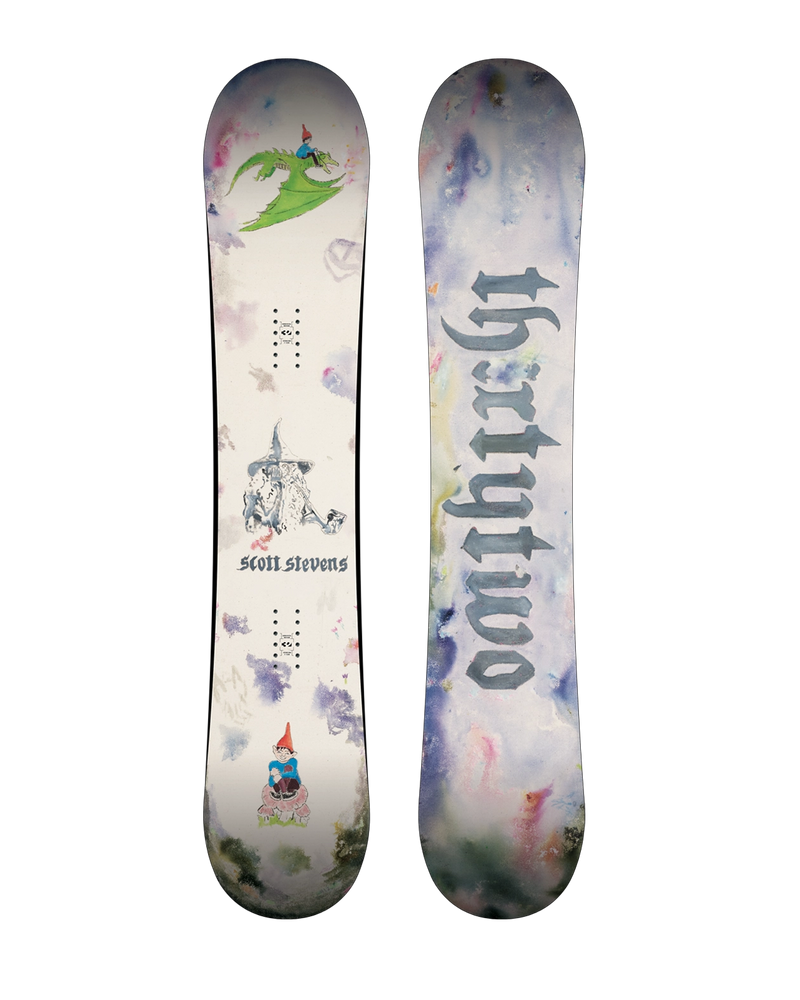
BEST SELLER SNOWBOARDS (18)

Explore more

Best seller snowboards

thirtytwo has been rider-owned since 1995, built by snowboarders who wanted better gear. Three decades of that rider-driven approach to steel, park, and pow has made us one of the most trusted names in snowboard boots and bindings.

Now thirtytwo goes head-to-toe with its first-ever snowboard line: 12 shapes, 108 sizes, true camber, and graphics from the skate, tattoo, and streetwear artists who shape the brand's look. It's paired with the FASE® fast-entry binding system. A patented two-strap setup that gives you the same locked-in, high-performance feel as a traditional strap binding, without the ritual: strap in once at the start of the day, then just get in and ride, run after run. The Wrap Tech FASTSTRAP ankle strap keeps boot and board moving as one without choking your range of motion, and the AutoBack highback flexes with you through presses, tweaks, and grabs instead of fighting you. And because FASE is engineered as ingredient technology, it works with any boot on the market, no proprietary lock-in required.

Outerwear carries the same rider-driven legacy. The Basement Bib has set the benchmark since day one. 32 REPEL 15K waterproofing and breathability, 4-way stretch, and a loose, no-restriction fit built for the way riders actually move, not a runway. The new Jib Gurl Pant has been a team favorite, a baggy park pant with love to details.

thirtytwo now makes every piece of what a rider straps on: boots, bindings, boards, and outerwear, built without compromise.

FAQ

What size snowboard do I need for my height, weight, and boot size?

Board length generally comes down to your height and weight. As a starting point, stand the board upright and look for it to reach somewhere between your chin and nose. Riders who prioritise stability and speed can size up; those who want a more playful, jib-friendly feel can size down. As a beginner, it's often best to size down for a more manageable, easier-to-control board. Boot size matters for width: if your boot overhangs the edges, size up to a wide board to avoid toe and heel drag.

What's the difference between all-mountain, freestyle, and freeride boards?

thirtytwo's line breaks this down into three collections: SHRED boards are all-mountain directional twins built for every transition, lip, side hit, and roller. Regular or switch. DESTROY boards are true twins built for park laps, with a flex that snaps back and construction that holds up lap after lap. SFD boards are built for sidecountry freeriding, shaped for the drawn-out turn and chasing better lines.

Should I get a directional, twin, or directional-twin shape?

True twin shapes are symmetrical nose to tail, so you ride switch as easily as forward, ideal for park and jib riding. Directional shapes are longer and wider at the nose, built to point downhill fast and float in powder. Directional twin (like our SFD line) splits the difference: symmetrical enough to ride switch off a lip or side hit, directional enough to hold an edge across the whole mountain.

What flex should I choose based on my skill level?

Softer flex boards forgive mistakes and are easier to press and turn at slower speeds. They're a solid starting point for beginners and jib-focused riders (like the Cold World or Permanent Vacation). Mid-stiff flex (T32M) is the workhorse for riders jumping, jibbing, and riding hard across the mountain. Stiffer boards hold an edge better at speed and through variable snow, built for advanced and freeride riders.

What's the difference between Camber, CamRock, and Hybrid Camber?

Camber lifts off the snow between the bindings and contacts at the tip and tail, giving a strong, poppy edge hold and a stable ride at speed. The Hybrid Camber combines camber underfoot with a flat section at the tip and tail for a blend of pop and stability. CamRock is a more forgiving shape that's easier to turn and forgiving in landings.

Do I need a wide board if I have big feet (boot overhang)?

Yes. If your boot hangs more than a small amount past the edge of the board (roughly a fingertip's width), go wide. Excess overhang causes toe and heel drag, which catches the snow and can throw you off balance, especially at speed or on hardpack. Consult the size chart to confirm if you need a wide board.

How often does a snowboard need waxing or tuning?

Base wax every 4-6 days of riding keeps the board fast and protects the base. Wax more often if you're riding a lot of variable or dry snow. Edges should get a tune (deburring and sharpening) every 10-15 days or whenever they feel dull. Edge sharpness is also down to preference: riders spending a lot of time on rails or street often prefer to detune their edges for smoother sliding and fewer catches. thirtytwo boards ship factory-tuned with Wend natural wax, so they're ready to ride straight out of the box.

What type of board should I choose as beginner?

Look for a true twin shape with a soft-to-medium flex: forgiving, easy to turn, and just as comfortable riding switch while you're learning. The Cold World, Crucible and Permanent Vacation are built exactly for this: a forgiving, playful flex that's friendly for riders finding their feet in the park and beyond.